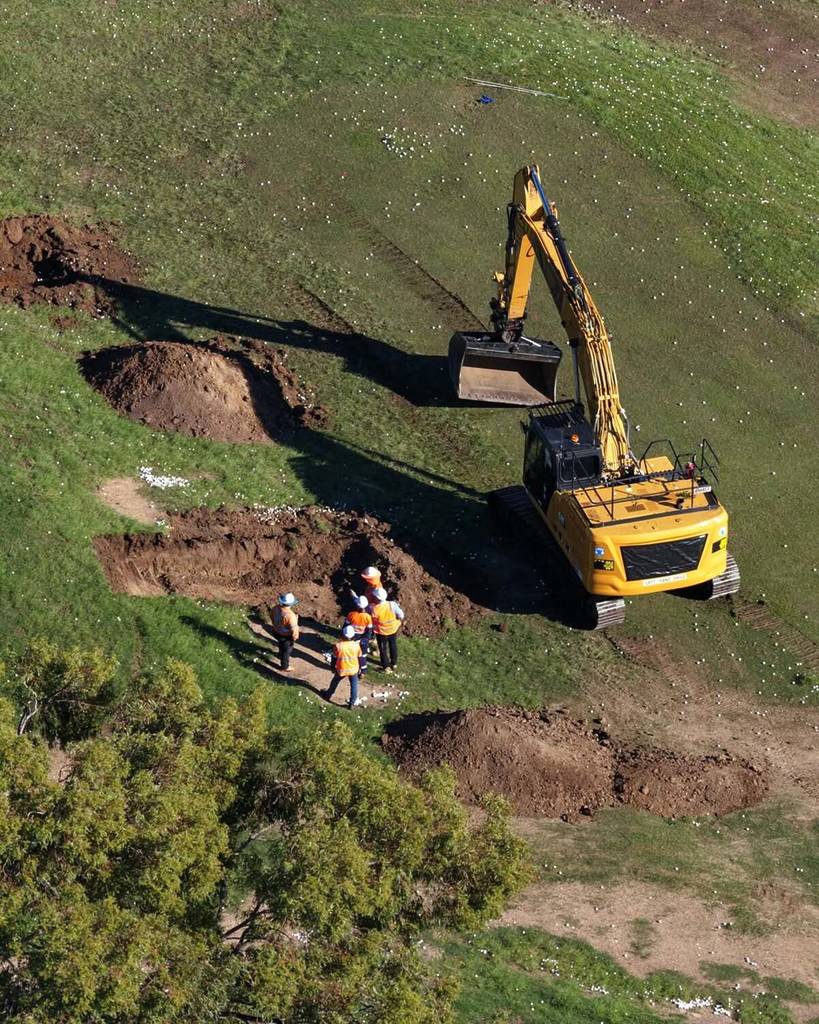

Despite protests this past weekend, work has begun at Victoria Park to make way for the new Olumpic Stadium. At midnight on Monday, June 1, the Games Independent Infrastructure and Coordination Authority took over the site, breaking ground for the 63,000-seat, $3.6 billion venue.
In honour of this occasion, and in contrast to the hundreds of people that gathered on Sunday, including the Save Victoria Park organisation, Premier David Crisafulli held a press conference, extolling the popularity of the project and assuring that said two-thirds of it will be green space and free to access.
There are also five applications to protect an area of the park under the Aboriginal and Torres Strait Islander Heritage Protection Act currently under consideration by the federal environment minister’s department — two others have been rejected — amid indigenous groups’ fears of losing a sacred site of deep culture significance. Unfortunately, the Act has no power to stop work, nor does it establish an official time frame to determine applications.
Crisafulli reiterated the right to protest, but cautioned against doing it at Victoria Park, saying, “Everyone’s got a right to protest, but from midnight this became a construction zone and that wouldn’t be safe — not just for them, but also for the workers. We have a duty of care on that. But they can continue to make a protest, of course they can.”
Five people were arrested on Friday, due to safety concerns, and the Goori Camp Embassy was evicted, but there were no arests made on Sunday’s protest.
GIICA chief executive Simon Crooks said the plan is for the Brisbane Stadium to be finished a year before the Olympic Games, with the early work being mostly the decommissioning of existing services underground in the park, and testing before earth works begin.
As the new stadium will also be home to AFL and Cricket, the press conference also featured representatives from the Brisbane Lions and Cricket Australia, who spoke fondly of the Gabba, their current home, but highlighted the necessity of a bigger stadium.
For their part, protest groups are holding out hope that the First Nations applications will bear fruit, and are calling on the government to hold off on the project until they have all been processed.