If you live in Brisbane, you’ve likely seen Candlelight’s golden scenes drift across your feed or heard friends rave after a night out. But what does it really take to make that calm glow? Think thousands of candles—5,000 candles, 10,000 candles, sometimes 15,000 candles—layered into one room so the music looks as soft as it sounds.
The count shifts by venue and program, yet one thing holds: it’s always candles in the thousands. Row after row, cluster after cluster—scale doing the quiet work, so the atmosphere feels intimate. And here’s the twist: the serenity you see is built on effort you rarely notice.
Table Of Contents
Candlelight in Brisbane: how the glow comes together
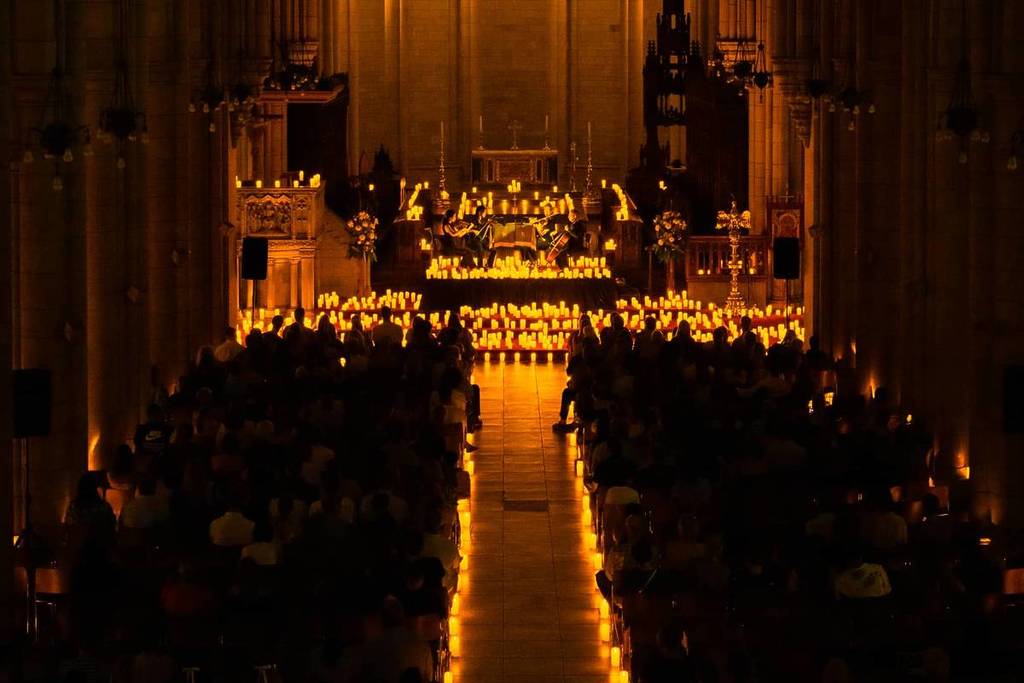
Boxes open; LED candles are unpacked in careful batches. Placement follows—edges, aisles, steps, and stages—spacing shaped by sightlines and flow. Then lighting: sections blink on, clusters gather into a soft field, and the room slowly lifts into a steady, even glow.
That’s when the transformation lands. A hall turns intimate, a stage feels freshly drawn. In Saint John’s Anglican Cathedral, stone softens, arches seem to rise, and the nave carries a gentle shimmer—an old space reading brand new, simply because thousands of small lights agree.
To put it in perspective: picture those thousands of candles sketched like pinpoints along the Story Bridge—tiny, steady lights tracing steel—and you get a feel for the scale at play. Or think of rows of tealights filling crate after crate; multiplied, they become a luminous tide around you.
And when the encore fades, the work runs in reverse. Candles click off, are gathered, sorted, and boxed. Surfaces are cleared, paths reopened. Then it happens again—another night, another venue, the same patient routine—so every audience steps into something that feels effortlessly new.
So next time you walk into a Candlelight concert in Brisbane, you’ll read the quiet differently. Behind the first note is an unseen build: unpacking, placement, lighting—repeated at scale—so you can simply arrive, exhale, and let the room do the rest.
23 October 2026 18:30 + more dates
Saint Stephen’s Cathedral
23 October 2026 20:30
Saint Stephen’s Cathedral
31 October 2026 20:30 + more dates
St John's Cathedral
30 October 2026 18:30 + more dates
St John's Cathedral
30 October 2026 20:30
St John's Cathedral
6 November 2026 18:30 + more dates
St John's Cathedral
6 November 2026 20:30 + more dates
St John's Cathedral
7 November 2026 18:30 + more dates
St John's Cathedral
7 November 2026 20:30 + more dates
St John's Cathedral
13 November 2026 18:30 + more dates
St John's Cathedral
14 November 2026 20:30 + more dates
St John's Cathedral
21 November 2026 20:30 + more dates
St John's Cathedral
20 November 2026 20:30 + more dates
St John's Cathedral
20 November 2026 18:30 + more dates
St John's Cathedral
21 November 2026 18:30 + more dates
Saint John's Anglican Cathedral
3 December 2026 18:30
St John's Cathedral
28 November 2026 20:30
Grand on Ann
28 November 2026 18:30
Grand on Ann
27 November 2026 20:30 + more dates
Saint Stephen’s Cathedral
5 December 2026 18:30
Saint John's Anglican Cathedral
5 December 2026 10:15
Queensland Multicultural Centre
4 December 2026 18:30
St John's Cathedral
18 December 2026 18:30 + more dates
St John's Cathedral
17 December 2026 18:30
Saint Stephen’s Cathedral
13 February 2027 20:30
St John's Cathedral
27 February 2027 18:30
St John's Cathedral
18 December 2026 18:00
St Mary's Catholic Church, Ipswich Catholic Community