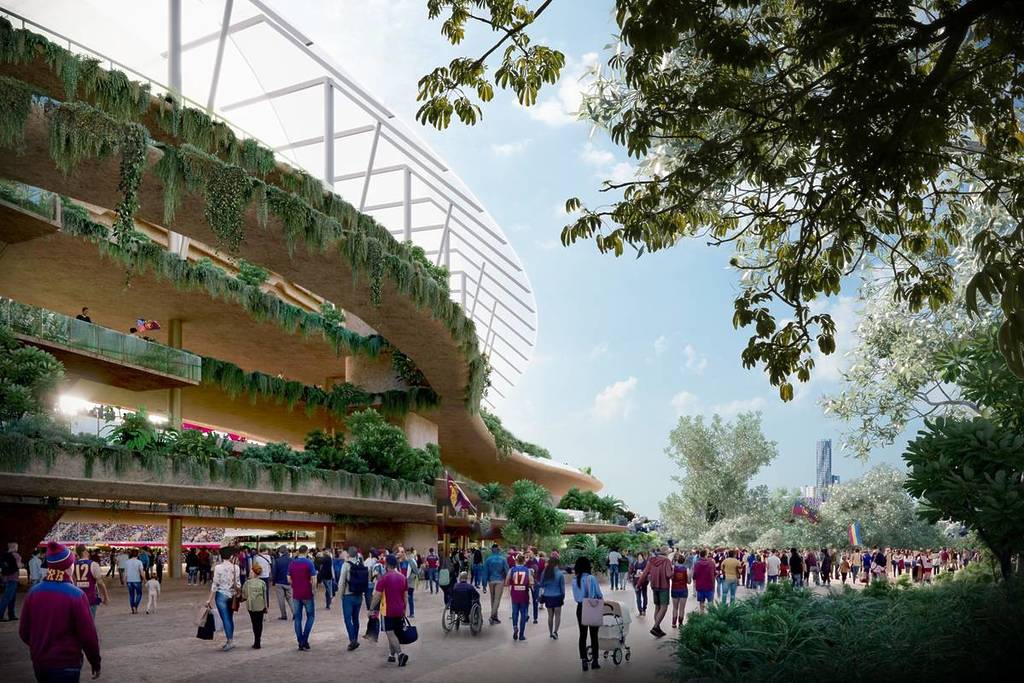
The long-awaited design for the 2032 Olympic stadium — whose proposed location at Victoria Park has caused some controversy — has been revealed, and with an estimated budget of $3.8 billion and capacity for 63,000 people, it’s as impressive as you’d picture.
Aussie-born firms COX and Hassell, along with Japanese stadium specialist Azusa Sekkei are behind the design of the massive sporting structure. A key feature of the project is a Queenslander-inspired pedestrian platform surrounding the stadium, allowing for natural ventilation and a better integration into the Victoria Park landscape, linking the park to the CBD via one existing pedestrian bridge, and an additional one.
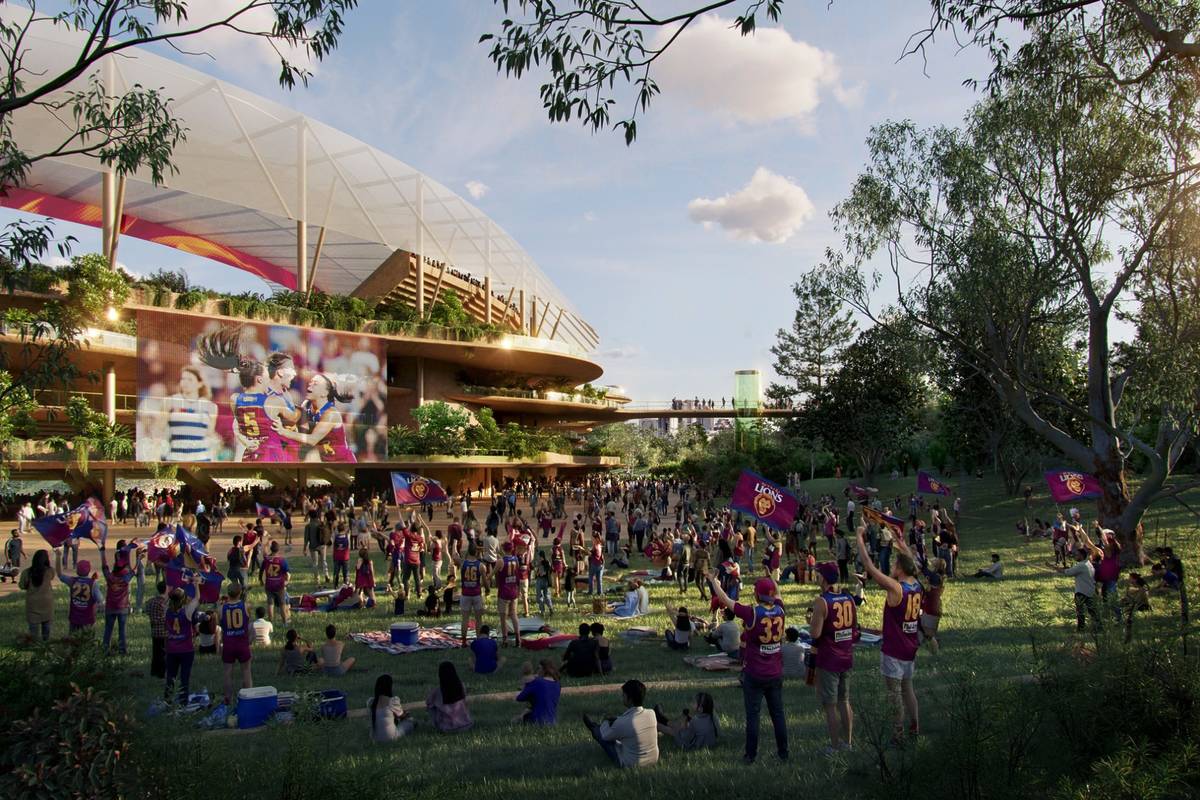
Although few other details are known, as construction is not set to begin until 2027, the renders suggest the walkway will be sinuous and lined with greenery, and its wraparound rooftop will be interrupted by a circular oculus. A giant LED screen and seating bowl will be largely covered, and external screens may be integrated into the façade as well, allowing for spectators outside the venue to potentially witness major events.
The new stadium, which will host the opening and closing ceremonies for the 2032 Games, is being built instead of upgrading the Gabba, as was initially proposed. This decision caused significant agitation, due to concerns around the environmental impact of the structure, such as deforestation, as well as opposition to the loss of cultural heritage and public space.
Additionally, Victoria Park is known to local First Nations people as Barrambin, and has been an important place of gathering for Aboriginal communities for thousands of years, leading to controversy over the possible destruction of and archeologically and spiritually significant site.
Those in favour of the venue cite its potential for future events, including concerts and other sporting events, and the possibility of becoming the future home of the Brisbane Lions and a key cricket venue post-Games.