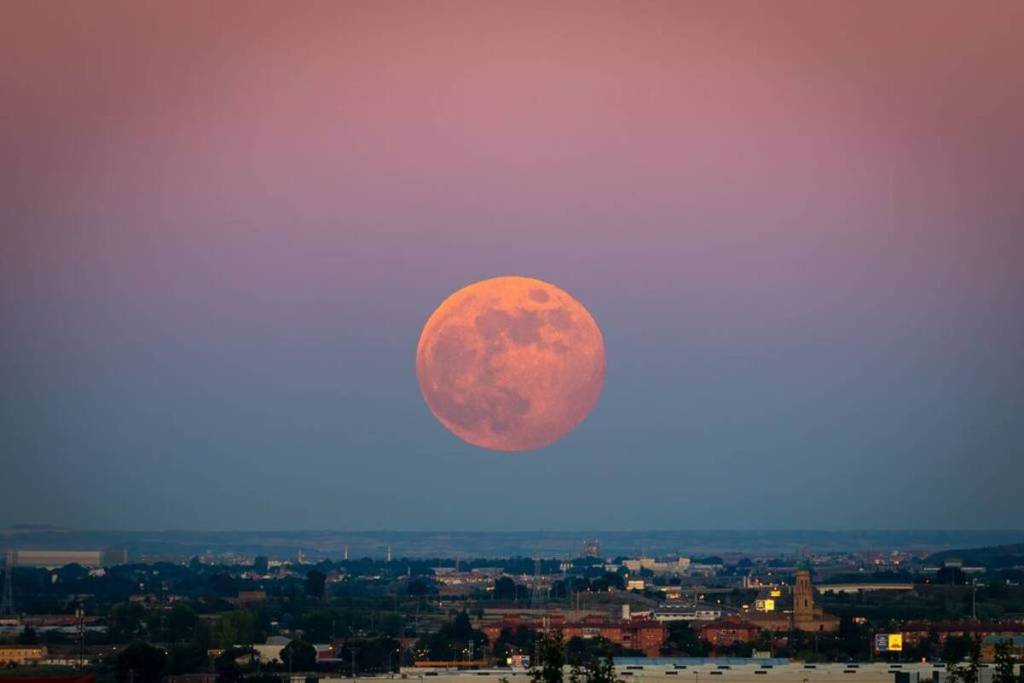

Winter nights provide some of the best opportunities for stargazing in Australia, and skywatchers have another reason to look up this week. The first full moon since the winter solstice is set to illuminate skies across the country, bringing with it one of the year’s most recognisable lunar events. Known as the Strawberry Moon, June’s full moon also comes with a few astronomical quirks that make it a particularly noteworthy sight for anyone with an interest in the night sky. Whether you’re an avid astronomy enthusiast or simply looking for a reason to step outside after dark, here’s when to catch the Strawberry Moon in Brisbane and around Australia.
What is the Strawberry Moon?
The Strawberry Moon is the traditional name given to the full moon that occurs in June each year. Despite its sweet moniker, the moon won’t actually appear pink, red or strawberry-coloured. The name is widely believed to have originated from Native American communities, where the June full moon coincided with the short strawberry harvesting season in parts of North America.
This year’s Strawberry Moon is particularly significant because it is also the second micromoon of 2026, meaning it will occur when the Moon is near its furthest point from Earth. As a result, it may appear slightly smaller and dimmer than an average full moon, although the difference is subtle and unlikely to be noticeable to the naked eye.
When can you see the Strawberry Moon in QLD and Australia?
The Strawberry Moon will officially reach its peak on Tuesday, June 30, at 9.56am in NSW, Victoria, Queensland, the ACT and Tasmania. In South Australia and the Northern Territory, it will peak at 9.26am, while viewers in Western Australia will see the peak at 7.56am. Because this occurs during daylight hours across the country, the best viewing opportunities are expected after sunset on Monday and Tuesday evening.
How can you see it?
No special equipment is needed to enjoy the Strawberry Moon, although clear, darker skies will make for the ideal viewing experience.
So if you’re looking for the best viewing experience, we recommend heading out to a dark, clear location like the Mt Coot-tha Summit Lookout — although the light pollution coming from the city might still affect your viewing experience — or, if you don’t mind a bit of a longer drive, places like Wild Horse Mountain and Lake Moogerah offer expansive views of the night sky.
Or, if you’re willing to make a trip of it, the Sunshine Coast Hinterland was just named Queensland’s first Dark Sky Reserve, with even more stunning views of the night sky, and several prime locations to stargaze from!
Read more about the Strawberry Moon on Space.com.
Editorial contribution by MJ Gayón.