
Queensland may be known as the Sunshine State, but that doesn’t mean there’s no darkness lurking in remote places. It may be hard to imagine, what with our beautiful beaches and charming country towns, but there are ghost towns in Queensland just waiting to give you goosebumps as you tour their old buildings and take in the eerie atmosphere.
Cracow
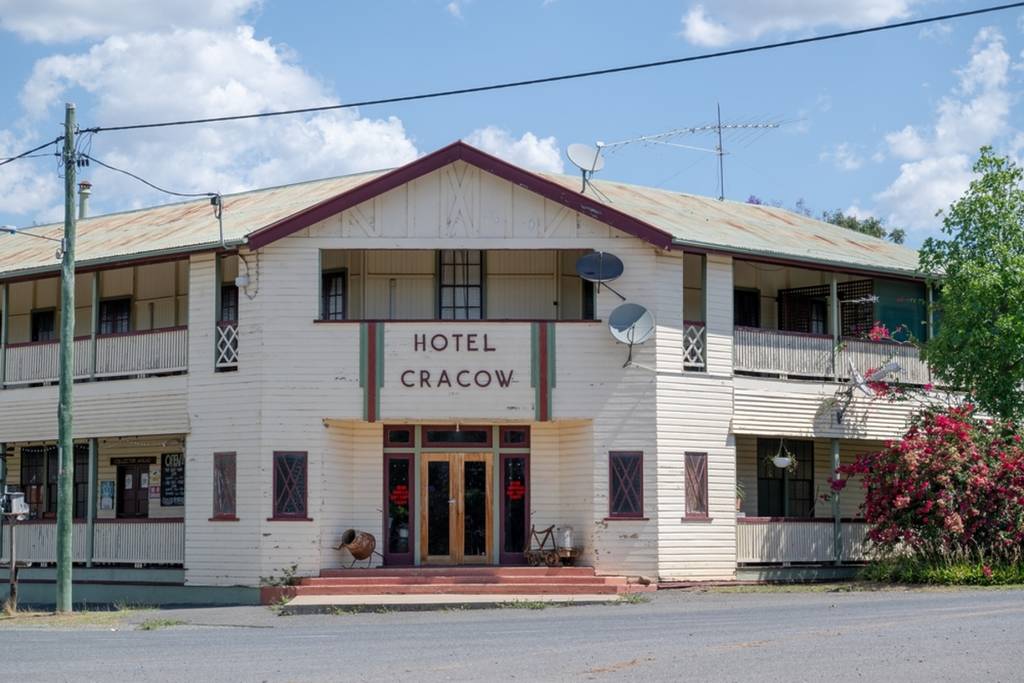
Perhaps the most well-known ghost town in Queensland, Cracow was officially founded in 1851 by pastoralist John Ross and named thus either in honour of Poland’s capital city or, more picturesquely, after the sound of a cracking whip.
Like most of our ghost towns, it was a mining town, getting its moment in the spotlight back in 1875 when miners struck gold there and it remained and important site until the mid-1970s, when the Golden Plateau Mine shut its doors. There was a short-lived effort to revive gold prospecting in the early 2000s, but the area has remained mostly abandoned since, with a population of only 114 in 2021.
At its peak, the town had five cafés, a barber shop, a billiard saloon — of course — two butchers, a theatre, a soft drink factory and a general store. Nowadays, it’s mostly the Cracow Hotel that shows any signs of life, with decades of memorabilia hanging off the walls and ceilings, transporting you to yesteryear. The Heritage Centre on Third Avenue also offers the opportunity to download the Storytowns app to hear more about Cracow’s History.
Copperfield
When copper was discovered in 1861 near Clermont, giving Queensland its first copper mine, the town of Copperfield was established. With a population of over 2,000, including Chinese and Welsh immigrants as well as Australia residents, at its peak, in the 1870s, the town had 370 houses, two banks, three butchers and three blacksmiths, a baker, six stores and six hotels, a school and even its own newspaper, the Copperfield Miner.
Since the mine’s closure in 1907, the population steadily declined and nowadays all that remains is a store, the cemetery, a chimney, and the area’s rich history. The Copperfield Chimney is the last remaining chimney from the Peak Downs Smelter, and a local heritage-listed building. The imposing structure can be seen from the outside, but there is no access for safety reasons.
There have been some recent initiatives from passionate locals to refurbish the remaining store so that tourists can physically enter it and get an even more vivid snapshot of the town’s past.
Mary Kathleen
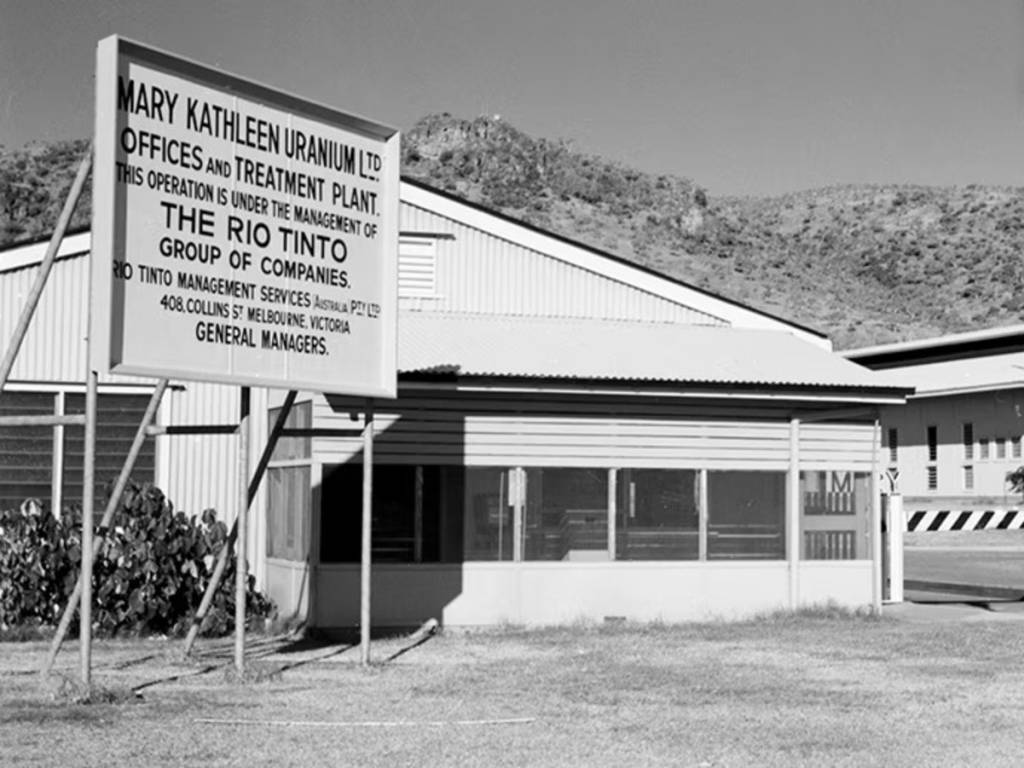
Although uranium has not been mined in over 40 years in mineral-rich Mary Kathleen in outback Queensland, yet the blue water of the old mine blazes as brightly as ever.
Established in the 1950s, during the uranium frenzy driven by the Cold War, the town, named after the late wife of the prospector who discovered it, reached a population of thousands until its final demise in 1982 — it had previously gone on hiatus for 10 years in 1963 — and uranium was banned shortly after.
The town had a school, an Olympic-size pool, a cinema, a golf course, two churches and a hospital. Only the town’s fountain and the outline of the pool remain now, as a lot of the structures left behind were auctioned off. However, the main draw the for tourists has always been the electric blue water of the pit.
This fluorescent hue is caused by chemical reactions with the metals and salts released from the surrounding rocks. It has been deemed safe to visit though, of course, swimming is prohibited, as the water is radioactive.
Mount Mulligan
The site of the Mount Mulligan mine disaster, Queensland’s worst mining disaster, Mount Mulligan may be the most haunting of the ghost towns on this list. On September 19, 1921, the town’s coal mine suffered a series of explosions that resulted in 75 casualties. The cause was deemed to be accidental or negligent firing of an explosive charge, and a Coal Mining Act was passed banning the use of open flames in underground coal mines in the aftermath of the disaster.
The mine reopened four months after and remained operational until 1957, and the town did not survive long after it closed. Currently, Mount Mulligan is considered to have no people or a very low population, with a single cemetery, the former hospital, a single chimney stack, and the remnants of the mining operations and electricity generator.
Min Min
This mysterious ghost town, with little to no population, is best known for the light phenomenon of the same name that has been observed for hundreds of years in the area. Stories about the Min Min lights predate European colonisation, but the first recorded sighting dates to 1838.
Folklore tends to characterize the lights, describes as fuzzy orbs that seem to hover over the horizon, as unknowable yet benign. And although it is unknown whether they are indeed real and, if so, what they are, reports are so widespread and they have garnered so much fame that the nearby town of Boulia has a Min Min Encounter attraction, a riveting show with animatronics telling intriguing stories about the lights.
Mount Britton
Founded in 1880 during the gold boom, Mount Britton at its peak had a population of 1,500 and boasted a post office, a school, a number of hotels and stores, a butcher and a baker. Mining officially stopped in 1890, although activity have been steadily declining for some years by then.
Today, you can still see some of the old mining equipment on display, some rustic shelters, a board with information about the area’s history, and a lookout. This ghost town is not just worth a visit for the spooky vibes, but also its stunning natural surroundings, making it an ideal place to camp — if you dare!
GET IN THE SPIRIT: Scariest Movies To Watch On Netflix Australia This Halloween Season